April 2025
When I bought the house in 2008, the front yard was a
disaster. It was completely overridden with weeds which had to be
sprayed with herbicide just to get it to bare dirt. I then
planted grass seed which took but over time it too was taken over by
weeds as the grass died. OK, I'll admit it - I killed it. I
became ever more conscious about how much water I was using so I tried
cutting back and killing it was the end reult. The silliness of
planting grass really hit me when I came across Conversation Between God and St.
Francis. If
you haven't seen it before, it's worth a few minutes to read for a
laugh and maybe some thought. That's when the kernel of an idea
of xeriscaping
was planted in my
brain. And of course Mother Nature is a dynamic duo so you if
you're going to have flora, you need fauna so the plan became to swap
out the grass for plants that encourage pollinators
to visit.
So I cleared the front yard to bare dirt yet again, and the project began.
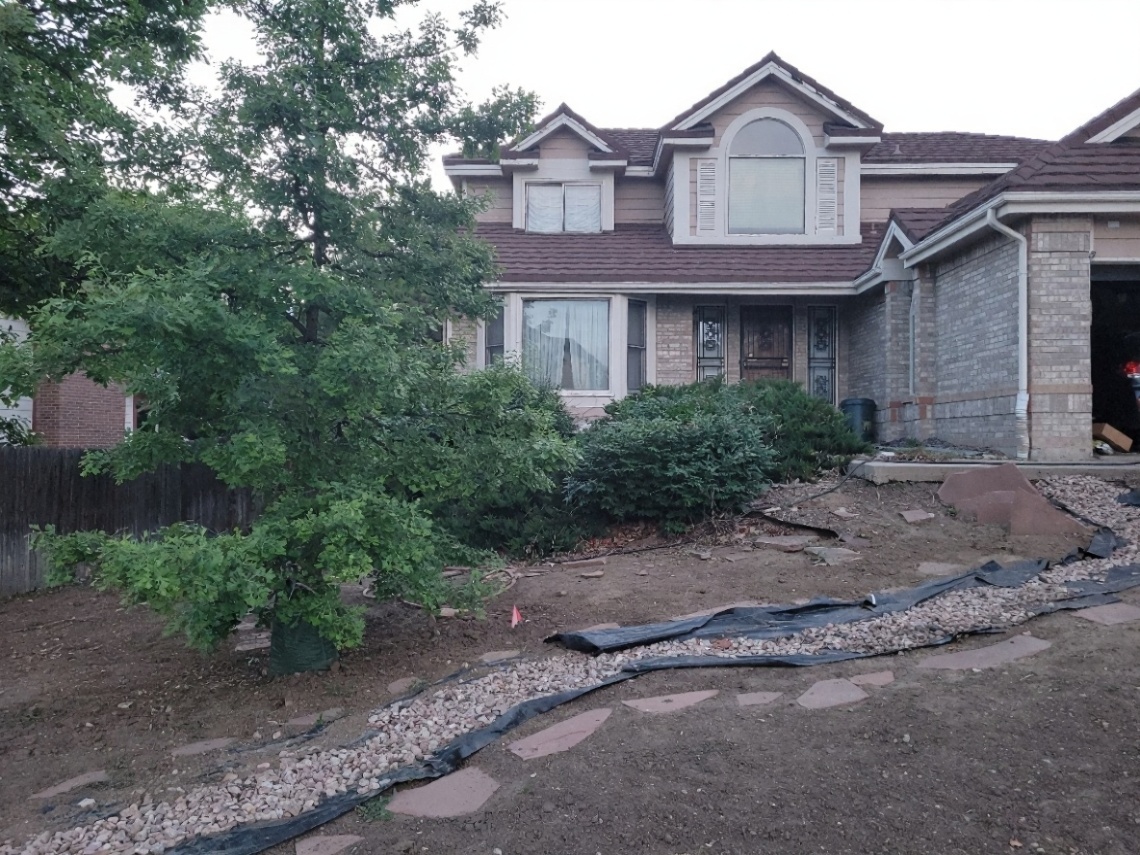
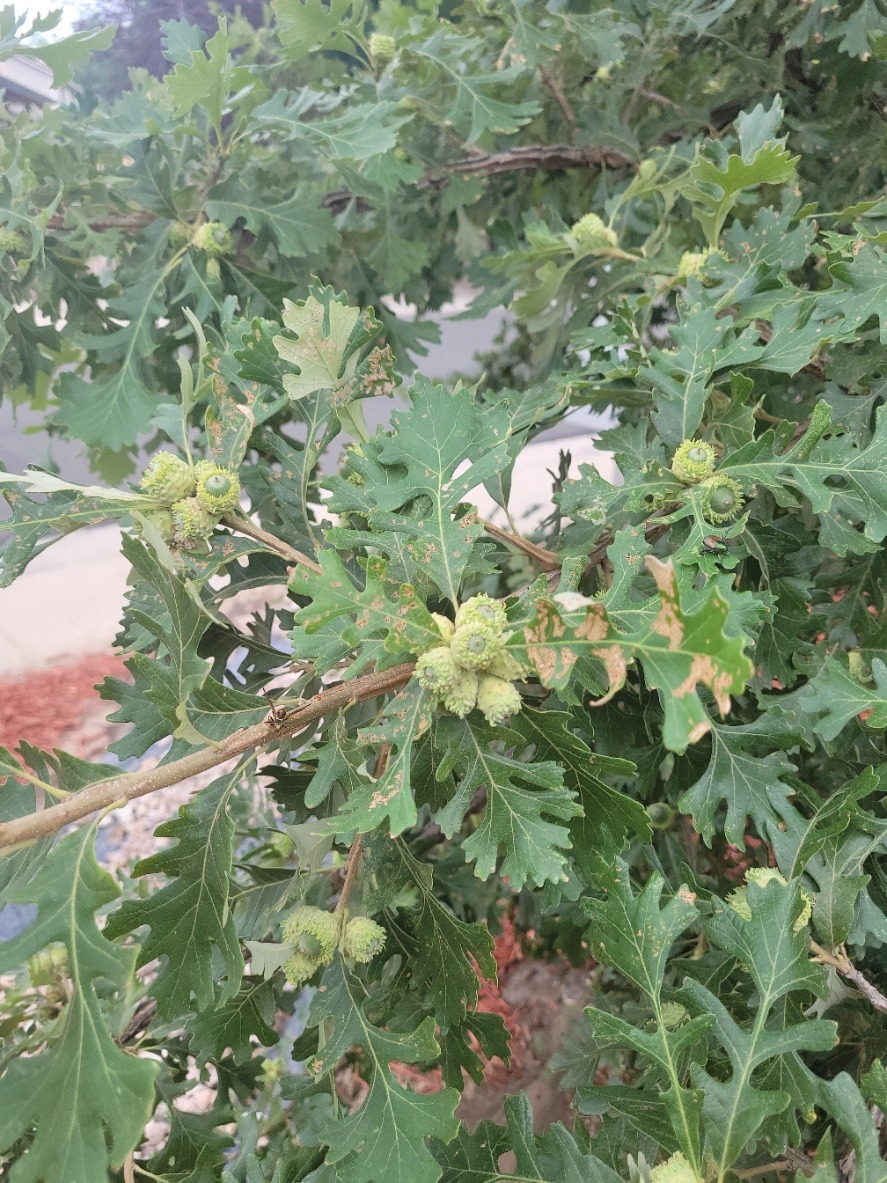
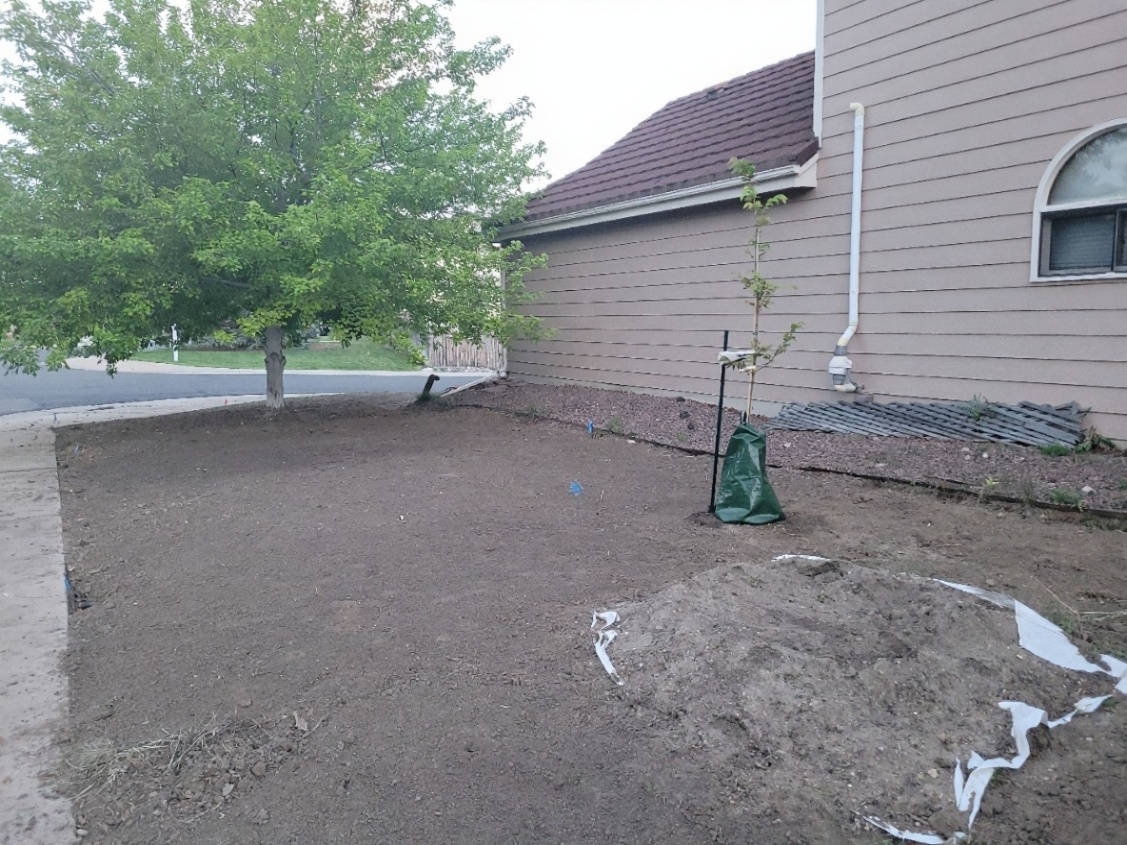
The tree pictured here is a Bur Oak.
It's a shade tree that has a mature height of 70-80 feet and I think I planted it in 2016. It
looks to be about the height of the 2nd story of the house. This is the first year that I have noticed acorns. They're
on every branch - a slew of them. I'm reading that Bur oaks
produce large, sweet acorns that are a desirable size and taste for
squirrels,
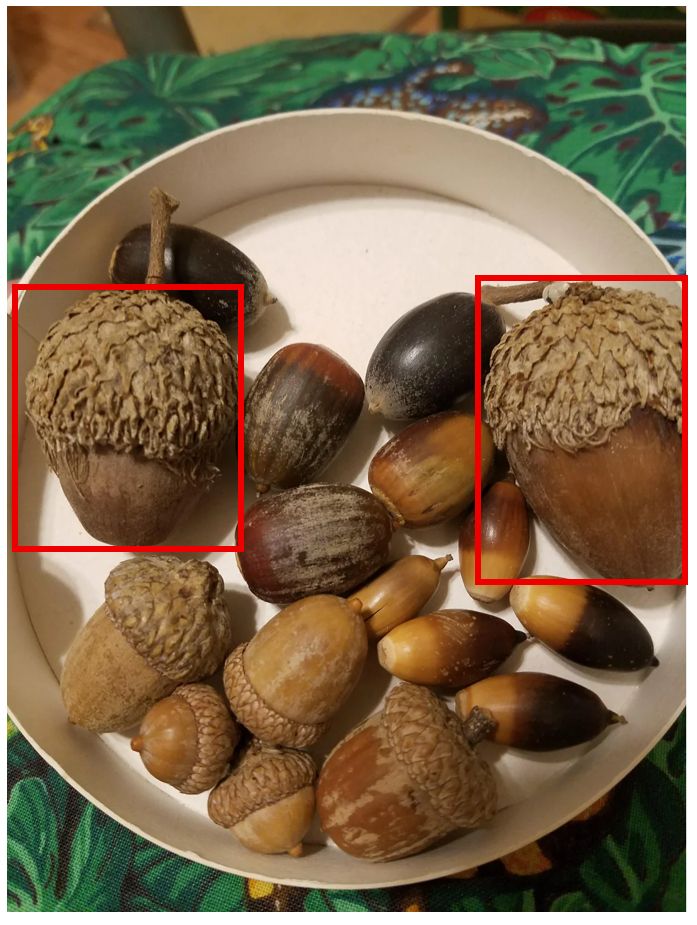
However, I think these might be considered appetizers so I'll have to wait and see.
After
I cleared it to bare dirt, my neighbors Jasmine and
Angela inquired into my plans only to get a puzzled
response from me. I had an ethereal idea of what I wanted
to accomplish, but I'm weak on execution. So, when they suggested
something, I listened. Jasmine pointed out that I needed to
address the gutter run off. There's
a gutter downspount on the front corner of the garage and I thought it
just dumped into the ground. When I was clearing the ground, I
discovered that it takes a left turn and goes under the concrete and
then dumps into the front yard. She pointed out that if I
didn't redirect that water, it would find it's own path and just wash
out
whatever I planted in its path so she suggested a "dry creek
bed". So I dug a small meandering trench that starts where
the under concrete empty, lined it with plastic and filled it with
rocks. Where'd I get the rock? Another neighbor - Etana -
was looking to remove rock so she could plant a garden and I needed it. Etana has more rock, so I have more put
to down but this is the
intended look. So, when it rains, the water will flow
through the creek bed and not cut a path. At least that's the
idea.
You'll notice some flagstone that lines the dry creek bed on either
side. Where'd I get the flagstone? Yup, a neighbor -
Jasmine. I walk her Shiba Inu 'Kona' once in a while and she
commented that they removed all the flagstone from their backyard and
had it stacked. They had initially offered it to some
contractors that there were going to do some concrete work for them and then
asked if I wanted it. True to my nature, I immediately said
'Yes' without having a clue what I was going to do with it. I initially
just laid them right on the ground and then got the idea to recess
them. If you look under the left side of the tree, there's
another path that goes to the fence gate.
Jasmine, Angela and Etana have been such wonderful neighbors giving me guidance, starter plants and continuous
cheerleading. I have been very lucky to have their help and I
make every effort to let them know how much I appreciate it.
This is a view of the
corner. The tree here is a Maple which was well established. The ground is clear here as well. Further back
is an Elm that I planted in April 2025.
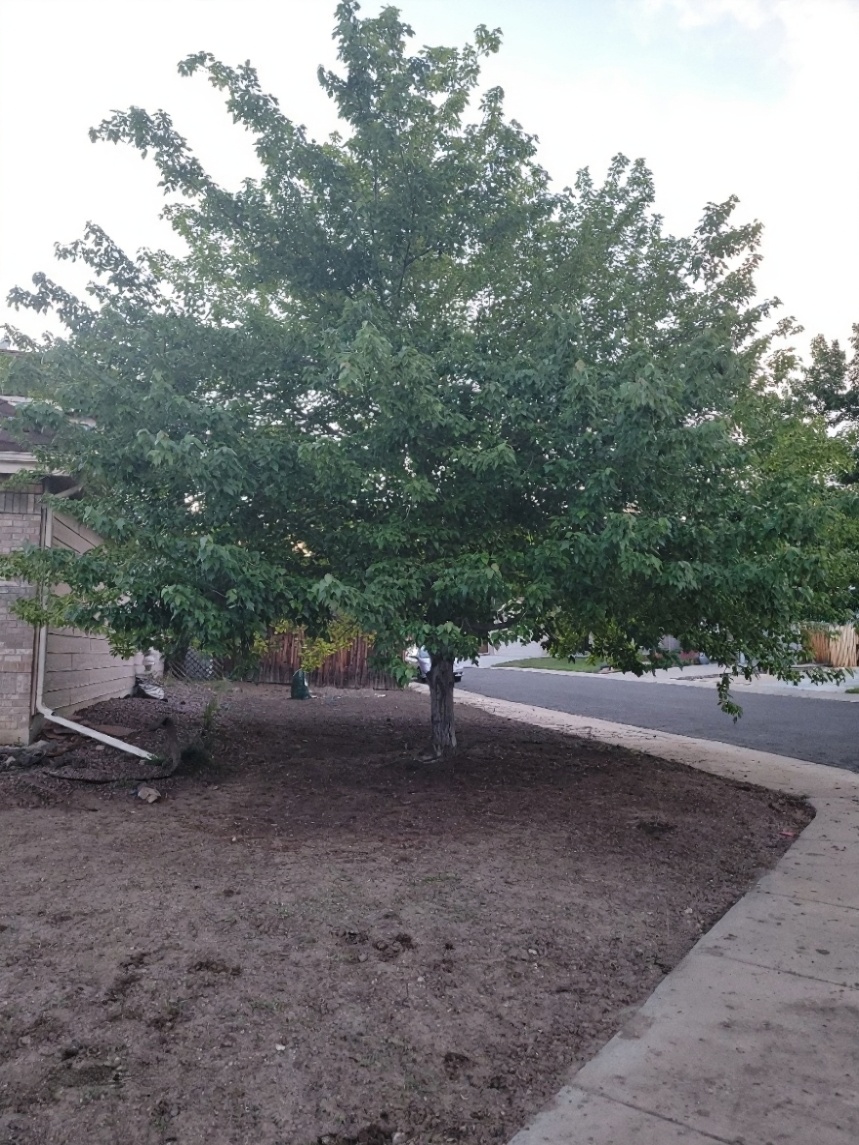
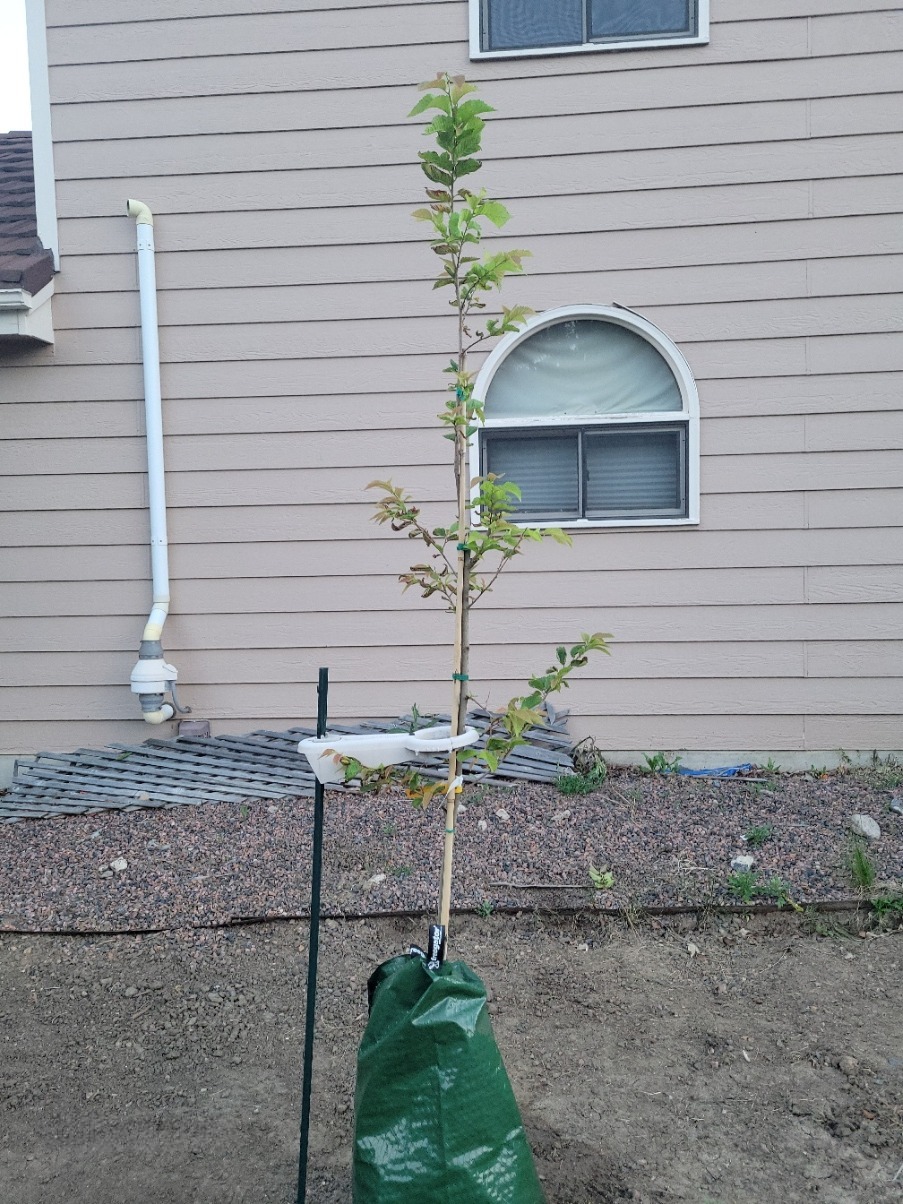
This is
the opposite view and the elm that I planted. Elms were immensely
popular in the Midwest resulting in the shade-lines streets of my youth
but millions were lost to Dutch Elm Disease (DED) by the mid
60s. This particular cultivar is David Elm
which
I'm told is supposed to be resistant to DED with a mature height of 50
feet and a dense canopy. Whereas the oak above is slow
growing, the elm is faster. If it does OK, it'll be interesting
to see if it catches up to the bur oak in a short timespan.
A
closer look at the David Elm.
Next Update: May-June 2025